

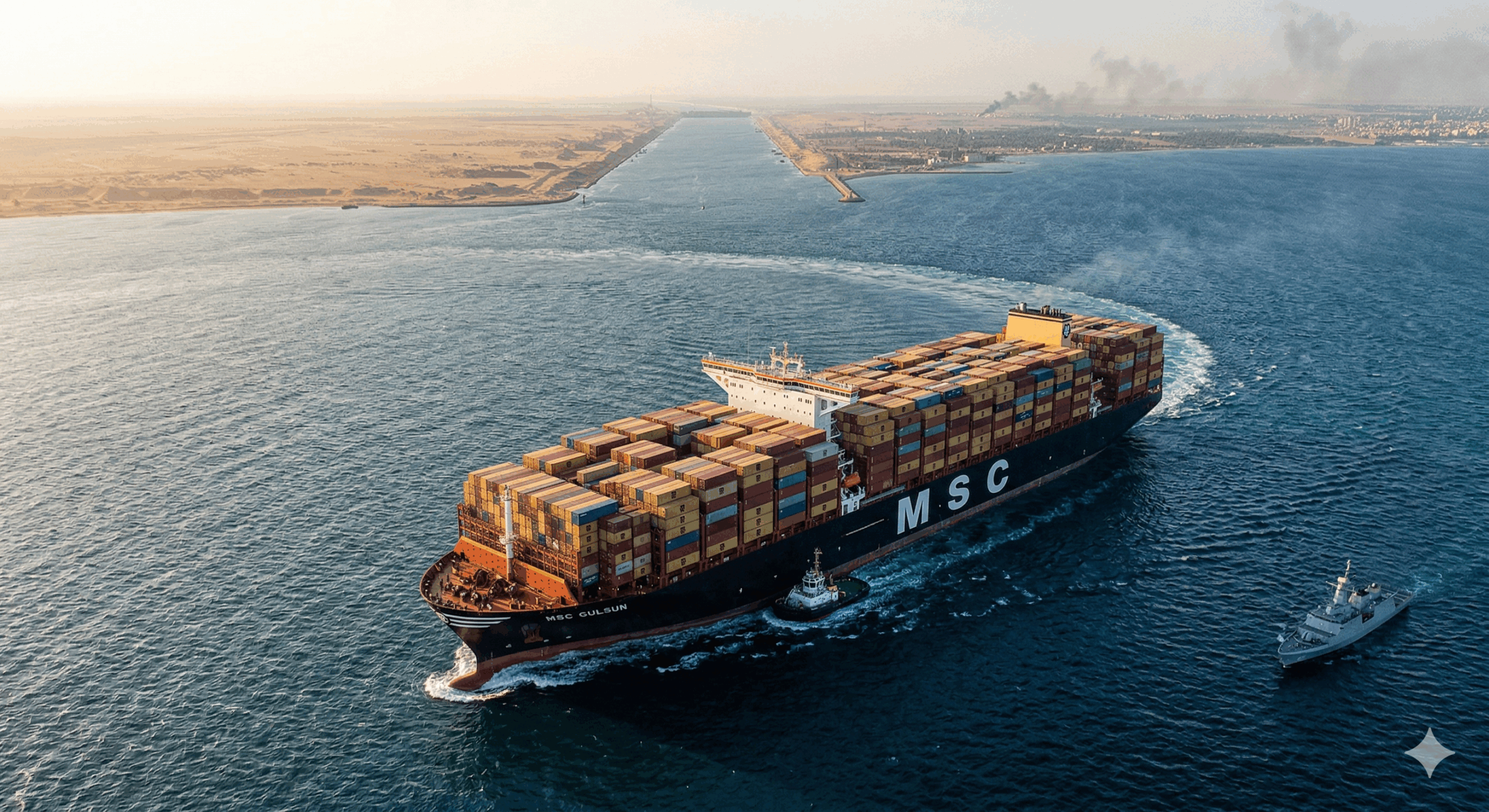
02 Mar Suez Canal Closure & Middle East Crisis: Global Shipping Braces for Indefinite Routing to Cape of Good Hope
Montreal, Quebec, Canada – March 2, 2026 – Shippers and logistics managers worldwide are scrambling to secure container space and revise supply chain forecasts following the indefinite closure of the Suez Canal and escalating instability across the Middle East.
The Breakdown: Suez Shut, Routes Diverted The most critical immediate impact is the total closure of the Suez Canal. While many shipments originating from Southeast Asia and the Indian Subcontinent had transitioned to utilizing the Suez route as recently as February, carriers have now halted all transits through the canal to avoid the widening conflict zone.
Impact 1: The Long Detour Around Africa In response to the closure, nearly all major shipping lines are diverting vessels around the Cape of Good Hope, a route that bypasses the Middle East and Red Sea entirely. This drastic shift has several cascading consequences:
- Transit Time Delays: For key lanes to Europe, the Mediterranean, and the USA, overall transit times are anticipated to increase by 10 to 14 days. This additional two weeks on the water will significantly strain inventory management and production schedules.
- Network Instability: As carriers rush to replan global vessel deployments and crew rotations, Prime Freight warns partners to expect a high frequency of vessel omissions at key ports and widespread delays in scheduled arrivals and departures. Our teams are in constant contact with carriers to secure updated schedules.
Impact 2: Regional Halts & Indefinite Stoppage The conflict has frozen operations in proximity to the unstable zones. Shipping lines operating services from Pakistan to the Arabian Gulf have halted all services indefinitely. Furthermore, for clients with cargo currently stuck in or planned to originate out of the UAE, Prime Freight has confirmed that these shipments have been halted indefinitely. We are working to identify alternative solutions for affected cargo where possible.
Impact 3: The Cost of Disruption – Surcharges Incoming Beyond the physical delays, the industry is bracing for immediate cost increases. Carriers are expected to implement substantial surcharges, specifically:
- Emergency Risk Surcharge
- War Risk Surcharge We are still awaiting official notifications from individual carriers regarding the exact amounts and effective dates of these charges, which will apply to certain affected routes.
The Road Ahead: Indefinite Disruptions and Continued Bookings Despite these massive operational headwinds, carriers continue to accept bookings for destinations in the USA, Europe, the Mediterranean, and the Far East—with the explicit understanding that all cargo will be routed via the Cape of Good Hope detour. The key challenge remains the total uncertainty of the timeline. Prime Freight is advising all partners that “we do not know how long the effects of the situation in the Middle East will remain over this region” or when the Suez Canal will reopen.
Contact Prime Freight for Specific Container Information Given the dynamic and rapidly evolving nature of this crisis, Prime Freight Logistics Inc. urges all clients to proactively manage their shipments. For specific details regarding your containers, in-transit cargo, or to discuss alternate routing strategies, please contact our global operations team immediately at info@primefreight.com. Our dedicated experts are providing real-time updates and constant communication to minimize the impact on your business operations.
 Français du Canada
  English (Canada)