

17 Juil Wildfires and Rail Delays: What Shippers Should Expect on Canadian Rail Networks
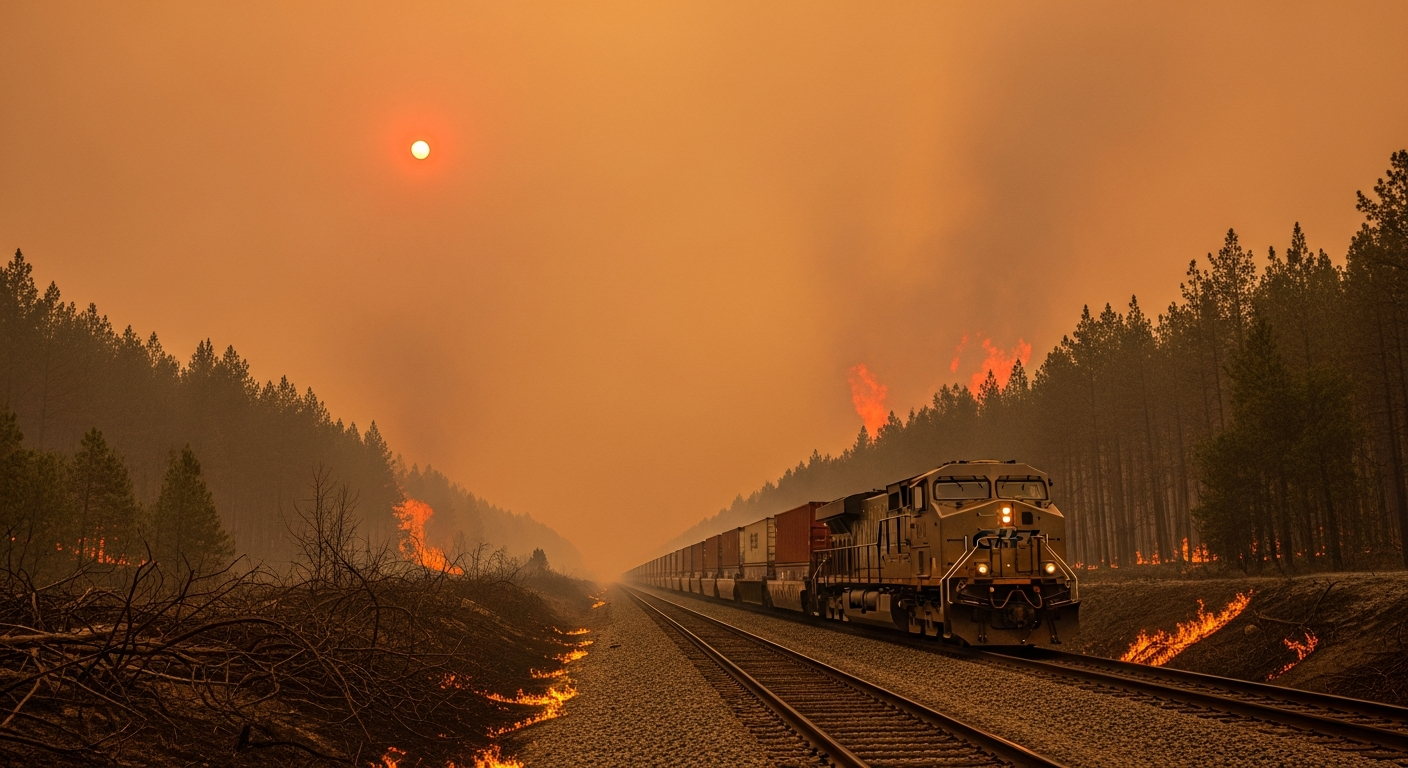
A recent report from CTV News described a harrowing scene in Northern Ontario, where a rail worker captured video of a CN train nearly surrounded by advancing wildfire. According to the report, the crew described being “encased in flames” as the fire closed in on the train. While the immediate story is about worker safety and a single dramatic event, the broader signal for shippers is clear: rail delays tied to wildfire and extreme weather are no longer rare exceptions. They are becoming a predictable disruption that needs to be built into freight planning.
Readers should verify the specific operational details of this incident directly with the carrier, as the source material we reviewed did not include a full account of the closure duration or the affected corridor. What follows is our analysis of the wider trend and what it means for supply chains that move freight across Canada.
Why rail is exposed to wildfire risk
Canada’s rail network is long, remote, and often runs through forested terrain that is exactly the kind of landscape most vulnerable to wildfire. Northern Ontario, the Prairies, and British Columbia’s interior all contain critical rail corridors that pass through regions with elevated fire risk during the dry season. When fire threatens a line, carriers have little choice but to halt or reroute traffic to protect crews, equipment, and infrastructure.
The consequences ripple quickly. A single closed segment can strand trains, back up terminals, and delay the intermodal containers that many shippers depend on to connect ocean freight from ports to inland destinations. Because Canada relies heavily on a small number of mainline routes, there is limited redundancy when a key corridor goes down.
The knock-on effects for shippers
When rail service is interrupted by wildfire, the impacts tend to compound rather than resolve neatly. Shippers should anticipate several downstream pressures:
-
Container dwell time at ports. When inland rail stalls, containers pile up at marine terminals, adding to congestion and potential storage charges.
-
Equipment and chassis imbalances. Delayed rail cycles mean equipment sits in the wrong place, tightening availability elsewhere on the network.
-
Cascading schedule slippage. A closure of even a day or two can take considerably longer to clear as backed-up traffic works through the system.
-
Trucking cost spikes. Shippers who divert to road transport to bridge the gap often face higher spot rates and limited capacity, especially on long-haul lanes.
A seasonal pattern, not a one-off
Wildfire seasons in Canada have been increasingly severe in recent years, and the freight sector has felt the effects through both direct line closures and secondary impacts such as reduced air quality slowing yard operations. For logistics managers, the practical takeaway is to treat wildfire-related rail disruption as a seasonal risk category, much like winter storms or spring flooding, rather than an unpredictable act of nature that cannot be planned around.
 Français du Canada
  English (Canada)