

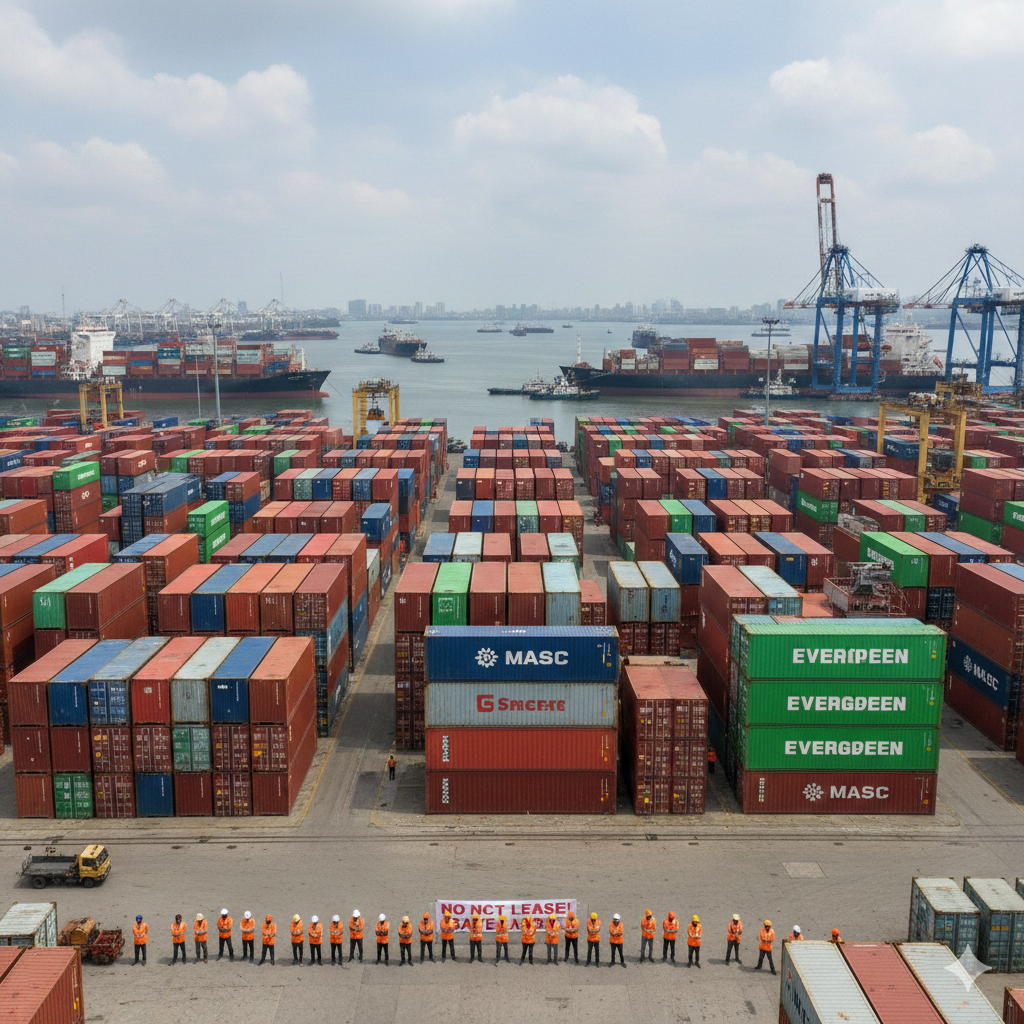
04 Feb Gridlock at Chattogram: Port Strikes Disrupt National Supply Chain
Operations at Chattogram Port, the primary gateway for 92% of Bangladesh’s import-export trade, have reached a critical standstill this week. A labor strike, now entering its fourth day, has halted the movement of thousands of containers, leaving global shipping lines and local businesses facing mounting losses.
The Root of the Conflict The unrest stems from worker protests against the proposed leasing of the New Mooring Container Terminal (NCT) to global operator DP World. While the Chittagong Port Authority (CPA) maintains that partnering with a global operator will modernize the port and increase efficiency, labor leaders argue the move threatens job security and national interests.
Economic Impact The disruption is being felt across all sectors, most notably in the Ready-Made Garment (RMG) industry. Key impacts include:
- Congestion: Over 10,000 export-laden containers are currently backlogged.
- Demurrage Costs: Shipping lines are reporting average losses of $15,000 per vessel, per day due to unloading delays.
- Logistical Bottlenecks: The flow between the port and the 21 private Inland Container Depots (ICDs) has been severely restricted.
Looking Ahead Emergency talks between port authorities, labor representatives, and business leaders are currently underway in Agrabad. While the High Court has recently cleared the legal path for the new terminal contract, the immediate priority for the industry remains the restoration of port fluidity to prevent further damage to the national economy.
 English (Canada)
  Français du Canada